Sewage Damage Cleanup in a Sugar Hill, GA Home
Location: Sugar Hill, GA
Type of Loss: Hidden sewage damage from a failed drain line beneath the concrete slab
Response Time: Within 60 minutes
Affected Areas: Family room and front hall - about 500 square feet
Mitigation Timeline: Two weeks
Provision Team: Four employees
The First Warning Sign Was a Bad Odor
A homeowner in Sugar Hill’s Abingdon neighborhood started randomly noticing an unpleasant odor in her family room. Then she began seeing signs of moisture around the vinyl plank flooring.
There was no dripping pipe or puddle that showed where the water was coming from, so she was confused and called her plumber. He found a failed drain line underneath the concrete slab which was leaking. Wastewater from the damaged line had contaminated the ground beneath the flooring in the family room and front hall.
Because sewage was involved, this was more than just a plumbing repair. The affected flooring and other contaminated materials also needed to be removed, and the exposed areas had to be thoroughly cleaned, treated, and dried.
The plumber recommended Provision Property Restoration to the homeowner, so she called us. Daniel, one of our experienced field techs, arrived within 60 minutes to inspect the damage and walk her through what needed to happen next.
How Can a Drain Line Beneath the Floor Cause So Much Damage?
Drain lines carry wastewater away from sinks, toilets, showers, and other plumbing fixtures. In a home that’s built on a slab, some of those pipes run underneath the concrete floor.
When one of these buried lines cracks, separates, or otherwise fails, the problem can remain hidden. The homeowner may notice an odor, changes in the flooring, or recurring plumbing issues long before seeing any obvious water.
For example, in this home, contamination had gotten under the vinyl plank flooring. Even though vinyl has a water-resistant surface, wastewater can travel through seams and become trapped under it. Once that happens, cleaning only the visible surface is not enough.
The flooring had to be removed for two reasons:
Contaminated areas beneath it needed to be exposed and properly cleaned.
The plumber needed access to the concrete slab so the buried drain line could be excavated and repaired.
That’s why we needed the flooring removed throughout the family room and front hall rather than only around one small spot.
Inspecting the Family Room and Front Hall
Daniel started by inspecting the visible damage and documenting conditions throughout the affected area. He also used professional moisture-detection equipment to help determine where moisture may have traveled.
His inspection included:
A FLIR infrared camera to identify surface-temperature differences that could point to possible hidden moisture
A Protimeter moisture meter to confirm elevated moisture levels in accessible flooring, drywall, framing, and other materials
Visual inspection of the flooring, lower walls, cabinetry, and nearby building materials
An infrared camera can’t see through a wall or floor, so Daniel didn’t rely on thermal imaging alone. He compared the camera’s findings with direct moisture readings and with what he saw as the damaged materials were removed.
The inspection showed that the family room and front hall were affected, covering about 500 square feet. Daniel explained the findings to the homeowner, answered her questions, and prepared a plan for safely removing the contaminated materials and getting the home ready for reconstruction.
Once the homeowner approved the work, Provision returned the next morning with a four-person crew to begin mitigation.
Removing the Sewage Damaged Flooring and Affected Lower Walls
The first major step was creating a controlled work area. Provision installed custom-sized containment barriers to separate the affected rooms from the rest of the home. This helped keep dust and debris inside the work zone, so other areas of the house could still be accessed by the family.
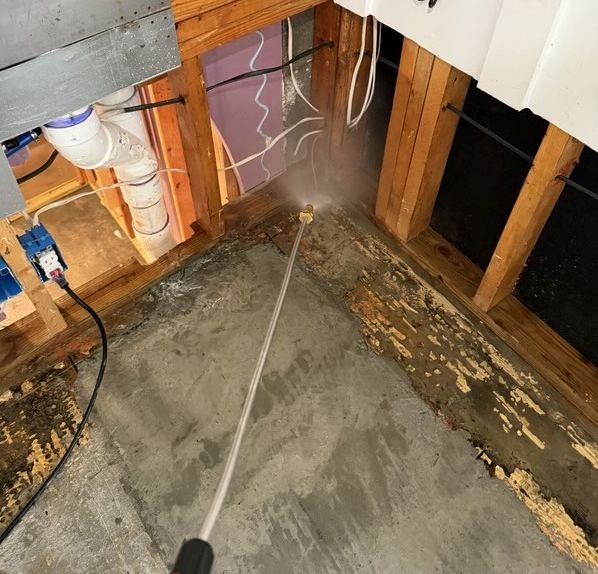
The crew then removed the vinyl plank flooring from the affected areas. This exposed the concrete slab, the flooring adhesive, and the path the plumber needed to reach the damaged pipe.
Sections of the lower drywall were also removed because those materials had been affected. Drywall is porous, which means contaminated water will soak into the paper and gypsum. Once sewage has affected it, wiping the surface is generally not enough to clean it safely.
Removing the lower portions of the walls gave the team access to inspect and clean the wall cavities, exposed framing, and other materials behind the drywall.
Provision’s demo and prep work included:
Installing containment barriers
Protecting unaffected rooms and belongings
Removing contaminated vinyl plank flooring
Removing affected sections of lower drywall
Opening wall areas needed for plumbing access
Exposing the slab and structural materials for inspection
Safely collecting and removing demolition debris
Opening the Concrete and Repairing the Drain Line
With the flooring out of the way, the plumber cut and excavated along the route of the damaged pipe and then removed the affected drain piping. Afterwards, they installed new PVC pipe connecting to the home’s existing drainage system and vertical drain stack.
After the new drain line was installed, the excavated area was backfilled and covered with fresh concrete.
The plumber handled:
Cutting and excavating the concrete
Accessing the failed drain line
Replacing the affected piping
Connecting the new pipe to the existing drainage system
Backfilling the excavated area
Pouring new concrete over the repair
Provision handled the removal of contaminated building materials and the cleaning, treatment, and drying of the affected rooms. In this case, the plumber referred us, but we also have a network of vetted, qualified local plumbers who we recommend for our projects. Sometimes, a homeowner or property manager dealing with water or sewage property damage doesn’t know who to call first, so they automatically call a plumber. Yet when the first phone call is to a restoration company, the mitigation work can begin immediately, lessening property damage. We can then at the same time bring out a plumber to begin work repairing any plumbing damages.
Cleaning and Treating the Exposed Areas
Once the contaminated flooring and drywall had been removed and the plumbing repair was complete, Provision could clean the exposed areas.
Removal was an important step since industry research and practices show that sewage damage can’t be handled by simply placing fans in the room and waiting for everything to dry. Contaminated materials must first be removed, and the remaining surfaces have to then be thoroughly cleaned and treated.
Our Provision crew cleaned the exposed concrete, framing, wall cavities, and other salvageable surfaces. The work area also received detailed cleaning to remove residue and dust created during demo and plumbing repairs.
Provision’s cleanup process included:
HEPA vacuuming appropriate exposed surfaces
Cleaning the concrete slab and remaining structural materials
Treating salvageable surfaces with an antimicrobial product
Cleaning exposed wall cavities and framing
Using HEPA air scrubbers to filter airborne particles
Preparing the remaining structure for professional drying
HEPA air scrubbers helped filter particles from the air inside the contained area. They were used alongside the cleaning process, not as a substitute for removing contaminated materials.
Drying and Monitoring the Home
After the contaminated materials were removed and the remaining surfaces were cleaned, Provision installed professional drying equipment.
Air movers circulated air across the exposed materials, while dehumidifiers removed moisture from the room. The team returned daily throughout the project to take moisture readings, check the equipment, and make adjustments as conditions changed.
Provision monitored:
Moisture levels in accessible areas of the concrete slab
Moisture readings in remaining wood framing and wall materials
Indoor temperature and relative humidity
Air-mover and dehumidifier performance
Conditions inside the contained work area
The mitigation process lasted about two weeks. Equipment remained in place as needed until the remaining materials reached the needed moisture levels and the area was ready for reconstruction.
Helping the Homeowner Handle Insurance
The homeowner was surprised that a drain line hidden beneath the concrete could lead to such extensive work. What first appeared to be an unexplained odor turned into flooring removal, wall demolition, concrete excavation, plumbing repairs, cleaning, and structural drying.
She also had questions about her insurance claim and the documentation her adjuster would need.
Provision’s field and office teams documented the project from beginning to end with:
Photos of the affected areas
Moisture readings
Equipment records
Notes describing the work performed
Documentation of removed materials
Information requested by the insurance adjuster
Provision also communicated with the homeowner, plumber, and insurance adjuster throughout the project. Through our experience we’ve found that clear documentation gives the adjuster an accurate record of the damage and completed mitigation work, which makes the insurance claims process more streamlined and with less hiccups.
For the homeowner, she noted that having our staff and on-site team help her through all of this made it so much easier to manage, since she didn’t even know where to begin.
What Should You Do If You Smell Sewage in Your Home?
Don’t ignore a sewage odor simply because you can’t see a leak. The source could be behind a wall, beneath the flooring, or under the concrete slab.
Watch for warning signs such as:
A sewage odor that does not go away
Vinyl plank flooring that begins lifting or changing
Moisture appearing along the edges of a floor
Damp or discolored lower walls
Unexplained soft spots beneath flooring
Recurring drain backups or slow drains
If you notice these signs, keep children and pets away from the affected area. Avoid pulling up the flooring or opening walls yourself, since doing so could expose you to contaminated materials.
Professional Sewage Damage Cleanup in Sugar Hill, GA
Provision Property Restoration provides professional water and sewage damage cleanup in Sugar Hill and throughout North Atlanta.
Our services include:
Emergency response
Sewage damage cleanup and sanitization
Water damage mitigation
Containment setup
Removal of contaminated flooring and drywall
HEPA air filtration
Cleaning and treatment of salvageable materials
Structural drying
Moisture monitoring
Damage documentation
Communication with insurance adjusters
If you notice a sewage odor, damaged flooring, or unexplained moisture in your home, contact Provision Property Restoration or call 678-383-0889. We will inspect the affected areas, explain what we find, and help you understand what needs to happen next.