Does Homeowners Insurance Cover Slow Leaks?
Most standard homeowners insurance policies don’t cover damage caused by long-term slow leaks. However, some insurance companies offer endorsements (or riders) that provide limited coverage for hidden water leaks that couldn’t have been reasonably discovered sooner.
The challenge with even these endorsements is that every slow leak claim will always fall into a gray area. Insurance companies don't just look at the damage itself. They investigate how long the leak existed, whether it was “discoverable,” what your policy specifically covers, and whether you took “reasonable action” after finding it as the homeowner.
That's why slow leak claims are some of the most misunderstood and hard to explain parts of property insurance.
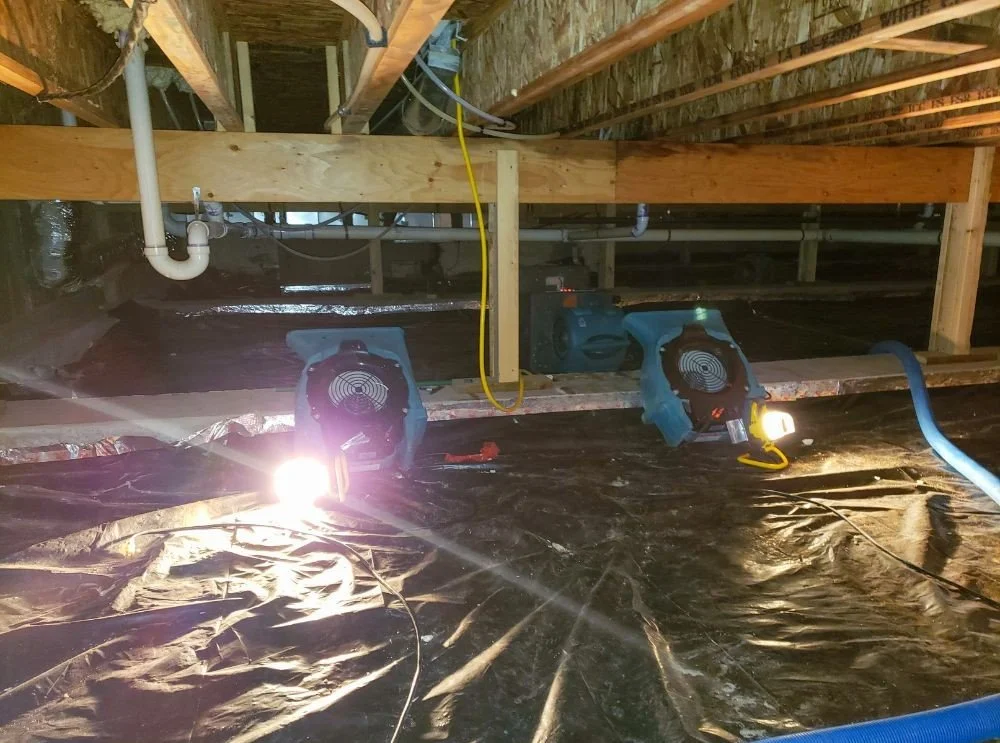
The Provision Property Restoration team drying the crawlspace of a Cumming home after flooding.
What Is Considered a Slow Leak?
A slow leak is a water leak that develops gradually over time rather than occurring suddenly.
Common examples include:
A loose plumbing fitting under a sink
A pinhole leak in a copper water line
A leaking refrigerator supply line
A small drip behind a wall
A slowly leaking drain pipe
Unlike a burst pipe, a slow leak may continue for weeks or months before obvious damage appears. By the time many homeowners discover the problem, water has already spread into cabinets, drywall, flooring, insulation, or framing.
Why Don't Standard Homeowners Policies Usually Cover Slow Leaks?
Most homeowners insurance policies are designed to cover sudden and accidental water damage, not damage that develops gradually over time. Insurance companies generally expect homeowners to maintain their property and address problems quickly before they become severe.
That’s why a burst washing machine hose is typically covered, but a supply line that slowly leaked for six months isn’t. It’s essentially an attempt to determine and measure responsibility. If they can make a reasonable claim that you were responsible for all or some of the damage from neglect or slowness, they’ll target that.
The distinction often comes down to Condition, which is one of the 4 C's of Insurance Claims:
Cause
Coverage
Condition
Confirmation
If the condition of the damaged materials suggests long-term exposure, coverage will become much harder to obtain if you don’t have that specific endorsement covering slow, hidden leaks.
Can Hidden Slow Leaks Be Covered?
Yes, sometimes. Most homeowners don’t have this added endorsement, and some insurance carriers don’t even offer it. If your insurance offers this endorsement, you might be able to get limited protection for hidden water leaks and seepage.
These endorsements are designed for situations where:
The leak was concealed inside a wall, ceiling, or floor.
The homeowner had no reasonable way to discover it sooner.
The damage developed within the timeframe defined by the policy.
The exact coverage varies a lot from carrier to carrier, and some endorsements cover only the resulting damage. Others include limited tear-out costs to access the leak. Either way, it’s important to understand that the coverage limits and exclusions differ widely, so it’s best to ask your insurance carrier about their exact coverage options.
What Is a Water Seepage or Hidden Leak Endorsement?
A water seepage endorsement is optional insurance coverage that may provide protection for certain hidden leaks that standard policies often exclude.
Insurance companies use different names for these endorsements, including:
Hidden Water Damage Coverage
Water Seepage and Leakage Coverage
Limited Water Damage Coverage
Hidden Decay Coverage
The goal of all of these is generally the same: to provide some protection when a leak develops in a concealed area that a homeowner couldn’t have reasonably inspected or noticed.
Unfortunately, many homeowners don't know if they have this coverage until after a claim occurs.
How Do Insurance Companies Determine Whether a Leak Was Long-Term?
Insurance adjusters look for physical evidence that reveals how long moisture has been present.
They may inspect for:
Wood rot
Mold growth
Corrosion
Deteriorated materials
Repeated staining
Warped flooring
These signs help establish the Condition portion of the claim.
For example:
A pipe that suddenly bursts overnight creates fresh damage with certain indicators, but a leak that’s been dripping for months often leaves visible signs of age and deterioration. Those signs can significantly influence claim approval or denial.
Should I File a Claim for a Slow Leak?
Before filing a claim, homeowners should first determine the source, extent, and likely age of the damage. Many homeowners assume every water issue should immediately become an insurance claim, but that's not always the best move. Provision Property Restoration offers free, no-strings-attached water damage inspections and consultations with industry-leading tools and friendly, trained professionals that are IICRC certified. Since there are so many factors to consider, like your deductible, your policy language, the condition of the damage, and whether or not you have a seepage endorsement, we always recommend speaking to us before reaching out to your insurance carrier.
Fully understanding the situation before calling your carrier allows you to make informed decisions and statements that can protect your right to a claim approval.
How Provision Helps Homeowners With Slow Leak Situations
Many homeowners don't know whether the issue is:
active or inactive
covered or excluded
minor or extensive
At Provision Property Restoration, our inspections help establish the facts and collect the evidence before any major decisions are made or money is paid.
We identify:
moisture levels
extent of spread
active leaks
hidden damage
signs of long-term exposure
Then we explain what we're seeing in plain language so homeowners can understand their options. We don’t sugarcoat it. Sometimes the news is good, but sometimes the damage is more extensive than expected. Either way, you’ll always have clarity to move forward with the right steps by calling us.
Frequently Asked Questions About Slow Leak Insurance Coverage
Does homeowners insurance cover a slow water leak?
Usually not. Most standard homeowners insurance policies exclude damage caused by long-term leaks, seepage, and ongoing moisture problems. However, some insurers offer endorsements that provide limited coverage for hidden leaks that couldn’t have been discovered sooner.
Will insurance cover water damage from a leak behind a wall?
It depends. If the leak was hidden and your policy includes the appropriate coverage or endorsement, insurance may cover some or all of the resulting damage. Coverage often depends on the cause, condition, and age of the leak.
What is considered a hidden water leak?
A hidden water leak is a leak that occurs inside a wall, ceiling, floor, crawl space, or other concealed area that a homeowner wouldn’t normally notice. Hidden leaks are often treated differently than visible leaks when insurance companies evaluate claims.
How do insurance companies determine whether a leak was long-term?
Insurance adjusters look for signs like mold growth, wood rot, corrosion, repeated staining, deteriorated materials, and other evidence that moisture has been present for a longer period of time. These clues help establish the age and condition of the damage.
What is a water seepage endorsement?
A water seepage endorsement is optional insurance coverage that may provide protection for certain hidden leaks and seepage issues that standard homeowners policies often exclude. Coverage limits and exclusions vary by carrier, so be sure to ask them for details.
Should I file an insurance claim for a slow leak?
Before filing a claim, it's important to understand the source, severity, and likely age of the damage. A professional inspection can help determine whether the issue appears sudden or long-term and whether filing a claim makes financial sense.
Can mold caused by a slow leak be covered by insurance?
Sometimes. Mold coverage depends on the cause of the leak, the policy language, and any mold-related coverage limits. Many policies restrict mold coverage even when the underlying water damage is covered.
What should I do if I find a slow leak?
Act quickly. Stop the source of water if possible, document the damage with photos, and schedule a professional inspection. Delaying action can allow the damage to spread and may complicate future insurance claims.
Is a burst pipe covered differently than a slow leak?
Yes. A burst pipe is generally considered a sudden and accidental event, which is often covered by homeowners insurance. A slow leak typically develops over time and may be excluded unless specific coverage exists.
Should I call a restoration company or insurance first for a slow leak?
In most cases, it's smart to start with a professional inspection. Understanding the cause, condition, and extent of the damage helps homeowners make informed decisions before opening an insurance claim.