If you’re suspicious of a hidden leak behind or around your dishwasher, here’s exactly what to look for to confirm it. First, check any accessible supply and drain connections for moisture, then look for swollen cabinets, warped flooring, and musty odors near the dishwasher. These signs often point to hidden water damage, but a professional inspection might be needed to identify the exact source and to determine the extent of the damaged materials.
Your kitchen subfloor could become ruined by a slow leak long before you ever see water on your floor. Moisture can seep out of sight and into your:
Lower cabinets
Baseboards
Subfloors
Some homeowners only spot the issue when wood starts warping or musty smells fill up the kitchen.
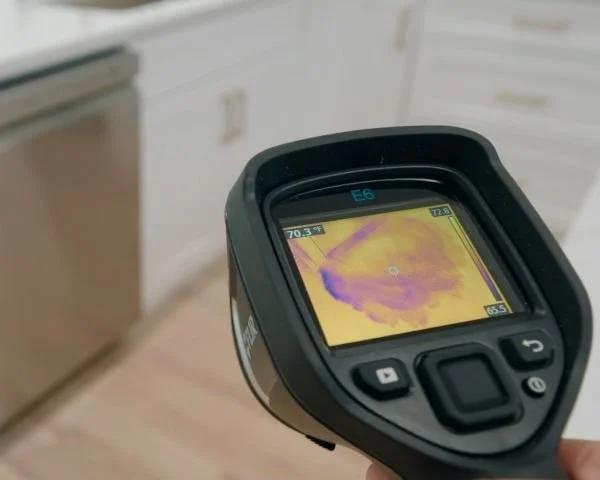
At Provision Property Restoration, our teams handle water damage restoration in and around north Atlanta by using thermal imaging and moisture meters to investigate hidden moisture without immediately tearing your whole kitchen up. Thermal imaging helps identify suspicious temperature patterns, while moisture meters help confirm whether the materials are actually wet. Our team offers 100% no-strings-attached free inspections to homeowners with reasonable water damage suspicions, so give us a call!
How Can I Spot the Signs of an Under-Counter Leak?
There are certain water signs you should never ignore. If you catch a leak early, you can avoid some extensive structural repairs. If you’re wondering, take a quick look for these around your kitchen cabinets:
Soft or swollen cabinet bases right next to the appliance
Cupping, warping, or dark stains on hardwood floorboards
Persistent musty odors inside your lower cabinets
Spongy or springy boards
Loose tiles or peeling vinyl near the dishwasher edge
It’s important to note that these signs can have other causes, so they don’t always confirm a dishwasher leak on their own.
How Can I Check for a Dishwasher Leak Without Pulling It Out?
You can check the easily accessible areas without removing the entire dishwasher. Look beneath the kitchen sink for moisture around the dishwasher’s supply and drain connections, then check the appliance’s front edge and nearby cabinet bases for dampness or stains.
If you find active leaking, stop using the dishwasher and shut off its water supply if you can safely reach the valve. Don’t run another cycle, because it’ll just continue to leak more, and don’t touch wet electrical equipment, or step into standing water to reach a switch.
In this scenario, it’s safest to leave the concealed components to a qualified technician or plumber. Always make sure to follow the manufacturer’s power-disconnection instructions before removing any access panel if you do attempt anything DIY.
How Is Under-Counter Water Damage Caused?
Kitchen appliances sit tightly inside cabinet cutouts, which makes small leaks very difficult to find. Over time, you might see that:
Rubber door seals harden
Drain pump seals wear down
Flexible supply lines weaken
These failures can allow water to escape from beneath or around the dishwasher.
How Can Thermal Imaging Find Moisture Without Demolition?
Our thermal cameras detect temperature differences and display them as visual patterns on a screen. Those patterns can suggest moisture, but wet materials don’t always appear cool, and temperature differences don’t necessarily mean water is present.
Our restoration teams combine thermal imaging with moisture meters to determine the extent of the affected area and measure how much moisture is actually trapped inside the material. These tools reduce unnecessary demolition, but concealed areas might still need to be opened for deeper inspection or drying. Our team never performs any demolition without your approval first.
Why Do Dishwasher Supply Lines Fail?
Slow drips and sudden breaks in the line can come from the same causes:
Rubber hoses can deteriorate and crack over time.
Threaded connections can loosen or lose their seal.
Fittings and connectors can become damaged or deteriorate.
What Else Can Go Wrong Behind Kitchen Walls?
There are other silent leaks you might find in:
sink supply lines
refrigerator ice maker lines
garbage disposals
Drain lines can also crack, leak, or back up into cabinet spaces. If any sewage is involved, professional contaminated-water cleanup is required to safely deal with the bacteria. Not every dishwasher or drain leak is a sewage backup, as sometimes it’s the clean water supply line only.
How Do Our Professionals Fix Under-Counter Water Damage?
Depending on the condition and contamination of the materials involved, our team comes in and does the following with years of expertise and professional tools:
Remove any standing water trapped beneath cabinets and remove damaged materials when necessary.
Set up containment barriers to help keep dust and contaminants from spreading during demolition and cleaning.
Use air movers and dehumidifiers to dry affected subfloors, with daily moisture readings to monitor progress.
Clean affected materials and apply antimicrobial treatment when necessary.
Does Homeowners Insurance Cover Hidden Dishwasher Damage?
Insurance coverage depends heavily on several factors. You can understand property damage insurance claims better by reading our 4 C’s of Insurance Claims:
Cause
Condition
Coverage
Confirmation
Water damage from sudden, accidental dishwasher failures is often covered under standard policies. However, gradual leaks lasting for weeks or months are often excluded, although some insurers offer optional coverage for certain hidden leaks. Coverage depends on your particular policy's terms, exclusions, and limits.
In every case, fast and clear documentation helps provide evidence of the damage and a record of when it was discovered. Documentation supports your claim, but it doesn’t guarantee coverage. Reach out to our team for more information or for help navigating your own policy.
What Should You Do Before Calling Your Insurance Company?
Don’t freak out when you see water damage under your cabinets! If you’re deciding whether you should call your insurance first or a restoration company, know that a free Provision inspection can help you assess the damage and likely costs. Our team will review your policy, determine and record the damage, and give you direction on the likelihood of insurance coverage.
At Provision, we offer free, no-strings-attached inspections. We’ll inspect the area and explain:
the moisture levels
what we can determine about the leak source
all of your options
If you choose to file a claim, our team can handle the documentation and talk directly with your insurance company to help your claim move forward.
Frequently Asked Questions About Under-Counter Water Damage
Can mold grow behind cabinets from a small leak?
Yes. A small leak can support mold growth when it keeps wood or drywall damp. The EPA recommends drying water-damaged materials within 24 to 48 hours to help prevent mold growth, but that isn’t an exact timetable for every situation.
How do I know if my subfloor is ruined?
Soft spots, sagging, or swelling can indicate subfloor damage. High moisture readings show that material is wet, but they don’t establish that it needs replacing. A professional inspection can help determine whether the material can be dried or requires removal.
What do I need to do before filing an insurance claim?
Document the damage and take safe steps to prevent further loss. You can call Provision for a free inspection to help assess the damage, insurance coverage, and likely costs.
Request Your Free Inspection Today
Don’t wait for a small under-counter drip to destroy your kitchen subfloor or lower cabinets.
Provision Property Restoration provides inspections across Sugar Hill and the greater Atlanta area. If you suspect hidden water damage behind your dishwasher, call Provision Property Restoration today or visit our Provision Resources Page to learn more.