Can Smoke From a Kitchen Fire Get Into Your HVAC System?
Smoke from a small kitchen fire can often spread beyond the kitchen. If smoke enters a forced-air HVAC system, the system can redistribute smoke particles and odors through the areas served by its ductwork, especially if the blower operates during or after the fire. Smoke and soot can also settle on HVAC components and surrounding building materials.
A small stove grease flare-up might only last a few seconds. You put the flames out quickly, open a window, and think the worst is over. But that’s not always the case.
Your heating and cooling system can pull toxic chemical particulates into your air vents if they’re running during or after a fire, and once smoke enters your HVAC system, it could move through every duct in your home.
Calling for a free professional inspection before turning your AC back on prevents you from long-term health risks. At Provision Property Restoration, we inspect homes for free to make sure there isn’t any hidden internal smoke damage.
How Smoke Travels Through Ductwork
Every time there’s a fire in your kitchen, hot air expands quickly and increases pressure, which forces fine soot particles and smoke gases into:
nearby return vents
electrical outlets
wall openings
Your HVAC blower fan then acts as a distribution pump sucking in those burning chemical compounds and blowing them into your bedrooms, hallways, and living spaces.
Can Smoke Get Inside Walls After a Kitchen Fire?
When fires generate extreme heat, it causes the air in your kitchen to expand at high speed. Hot smoke often seeks cooler, low-pressure spaces to escape, like cabinet cutouts, light fixtures, and unsealed drywall penetrations.
Simple surface wiping never fixes the smell because smoke moves through deep structural framing, so proper smoke mitigation needs structural inspection to find every hidden pocket of residue.
What Happens to Your HVAC Air Handler After Fire Exposure
Your air handler contains mechanical parts working under precise conditions. When smoke reaches the central unit, oily soot sticks to the damp surfaces of the evaporator coil, creating an unhygienic layer of grime that chokes airflow and ruins the system efficiency.
Soot also affects the internal blower fan blades and electrical wiring, contaminating or damaging control boards and leaving behind an aggressive burnt odor that can last for months.
How Smoke Contamination Affects Your Indoor Air Quality
Plastic containers, cabinet laminates, and appliance cords can release dangerous toxins when burned. Then, most standard HVAC fiberglass filters can’t trap microscopic smoke molecules and this recirculated soot starts irritating your lungs, eyes, and throat every time the heat or air conditioning is on.
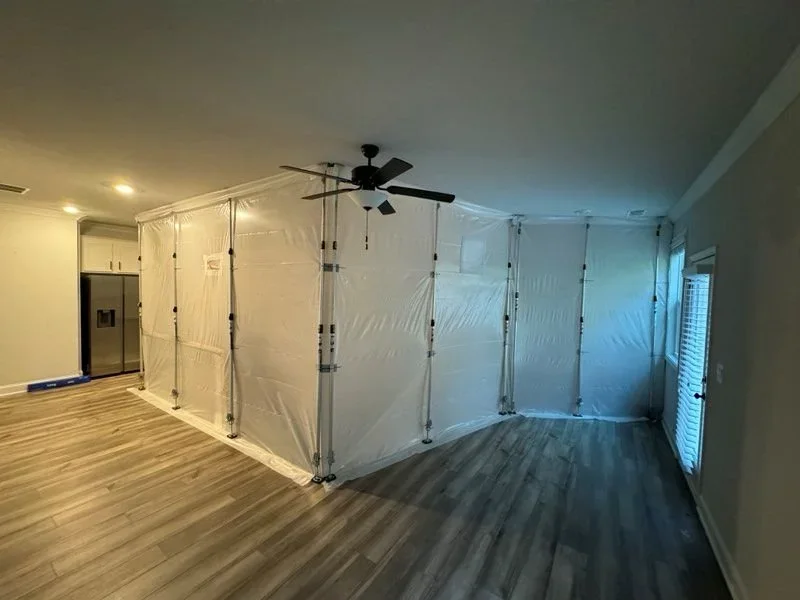
Running your system after a fire acts like a continuous smoke machine. To clear your indoor environment, technicians use professional containment barrier installation to separate the damaged kitchen from the rest of your home while cleaning takes place.
How Professionals Stop HVAC Smoke from Spreading
Professionals can limit HVAC smoke contamination by isolating affected areas, controlling airflow, filtering airborne particles, and cleaning contaminated surfaces and HVAC components as needed.
At Provision, we ensure to seal off the HVAC system completely so contaminated air can’t move around your home. Restoring air quality involves taking soot off ducts and neutralizing odor molecules in the air. We also install industrial HEPA air scrubbers that pull dirty air out while cleaning airborne particulates. After that, we apply specialized soot and smoke encapsulation products to lock down micro-particles inside:
Ductworks
Structural studs
Wall cavities
Air Scrubbing and Smoke Odor Treatment
Wiping down visible soot is only one part of smoke restoration. Smoke particles can remain suspended in the air, while odors can linger in porous materials and areas the original smoke reached.
We use professional air scrubbers with HEPA filtration to capture airborne particles released during cleaning. Activated carbon filtration may also be used to help control smoke odors and certain gaseous contaminants.
Depending on the property and type of smoke damage, additional professional odor-treatment methods may also be used after the source contamination has been cleaned. At Provision, this can include hydroxyl equipment as part of a controlled restoration process.
The exact treatment depends on where the smoke traveled, what materials were affected, and the severity of the contamination. No single machine replaces physical soot removal, source cleaning, filtration, and proper inspection.
Will Homeowners Insurance Cover HVAC Smoke Cleaning?
Insurance coverage for fire and smoke restoration will depend heavily on the 4 C’s of property damage insurance claims:
Cause
Condition
Coverage
Confirmation
Be ready to answer the following questions if you’re about to fill in a claim:
Was the fire an accidental event like a cooking mistake or short circuit?
Does your specific policy include smoke mitigation and structural cleaning?
Was the HVAC unit maintained properly before the fire occurred?
Did a qualified professional document the soot damage with photos and testing?
Documentation is an integral part of any claim, because insurance adjusters accept or deny these claims based on physical proof. Provision handles insurance communication for you, creating detailed digital photo logs, and submitting accurate line-item estimates so you don’t have to handle the stress on your own.
Get a Free Smoke and HVAC Inspection
If you had a kitchen fire, don’t guess or wait while soot settles deeper into your home. Provision Property Restoration offers free, no-strings-attached inspections across Sugar Hill and the greater Atlanta area to:
check your ductwork
measure hidden damage
explain your best options clearly
let you decide what comes next for your home
Contact Provision Property Restoration today to set up your free home consultation!
Frequently Asked Questions About HVAC Smoke Contamination
Should I Turn Off My HVAC After a Kitchen Fire?
If smoke from a kitchen fire may have entered your HVAC system, avoid running the system until you understand the extent of the contamination. Operating the blower can potentially redistribute smoke particles and odors to other areas served by the ductwork.
A professional inspection can determine whether soot or smoke residue reached the HVAC system and whether cleaning is necessary.
Can Smoke From a Small Kitchen Fire Get Into Air Ducts?
Yes. Smoke from even a small kitchen fire can enter nearby return vents and potentially travel into the HVAC system. The risk increases if the heating or cooling system is running while smoke is present.
Once inside, smoke particles and odors may settle on duct surfaces, filters, coils, blower components, and other parts of the system.
How Can I Tell If Smoke Got Into My HVAC Ducts?
Burnt odors coming from supply registers, visible soot near vents, or smoke odors appearing in rooms away from the original fire may indicate that smoke entered the HVAC system.
These signs do not necessarily reveal how far the contamination traveled. An HVAC or smoke damage inspection can help determine whether the ductwork or mechanical components were affected.
Do Air Ducts Need to Be Cleaned After a Kitchen Fire?
Not every kitchen fire requires complete air duct cleaning. The need depends on whether smoke entered the HVAC system, how far it traveled, the amount of soot present, and which components were affected.
An inspection should determine the extent of contamination before deciding what parts of the HVAC system need cleaning or other treatment.
Will Changing My Air Filter Remove Smoke After a Fire?
Changing the HVAC filter may help, but a new filter alone cannot remove smoke residue that has already settled throughout the system or building.
Higher-efficiency filters can capture fine airborne particles when the HVAC system is designed to accommodate them. However, particle filters do not necessarily remove smoke gases, odors, or soot already deposited on ducts and HVAC components.
Can Smoke Odors Stay in a House After a Small Kitchen Fire?
Yes. Smoke odors can remain after the visible soot has been cleaned because smoke can reach porous materials, hidden spaces, HVAC components, and other surfaces throughout the home.
Removing the odor may require cleaning the source contamination, filtering airborne particles, and treating affected materials rather than simply masking the smell with fragrances.
Can I Clean HVAC Smoke Damage Myself?
Light surface soot around a small, contained cooking incident may sometimes be manageable yourself. However, professional inspection may be appropriate when smoke has entered the HVAC system, spread into other rooms, or left persistent soot and odors behind.
The challenge is determining where the smoke actually traveled. Cleaning the kitchen alone may not address contamination that reached ductwork, HVAC components, wall cavities, or other areas of the home.
Will Homeowners Insurance Cover HVAC Smoke Damage After a Kitchen Fire?
Homeowners insurance may cover smoke damage resulting from a sudden, accidental kitchen fire, but coverage depends on your specific policy and the circumstances of the loss.
The cause of the fire, condition of the property, applicable coverage, and documentation of the damage can all affect the claim. Photos, professional inspection findings, cleaning estimates, and other documentation can help establish what was affected and what restoration work may be necessary.