What Should I Do If My Water Heater Bursts?
If your water heater bursts, shut off the water supply immediately and safely turn off the power or gas to the unit. Once the flow stops, document the damage and get standing water professionally extracted as quickly as possible because moisture can spread beneath flooring, into drywall, and down into crawlspaces before those areas look wet.
After a water heater burst, dozens of gallons of pressurized water pour directly into your home, and within minutes, this sudden flood can:
Ruin your flooring
Seep under baseboards
Soak crawlspaces
You can reduce the water damage by acting on your feet immediately and getting professional mitigation to ensure your home dries completely before mold sets in.
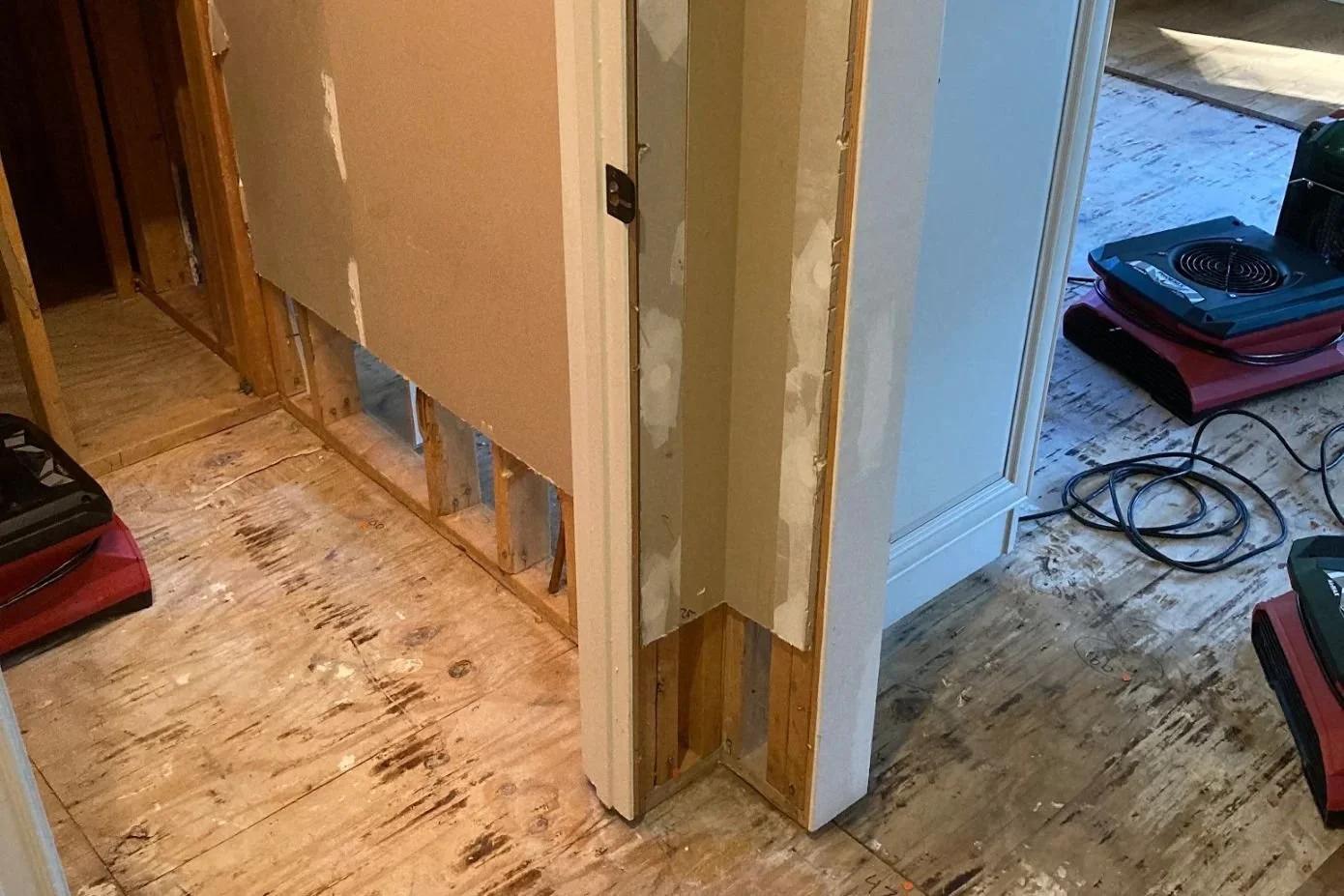
What to Do Right After a Water Heater Bursts
Turn off your water supply: Look for the cold water shutoff valve above the water heater tank and turn it clockwise to stop the flooding. If that valve is broken or stuck, shut off your home’s main water valve right away.
Shut down the power or gas units: Prevent any burnouts or fire hazards. Flip the circuit breaker off in your main panel for the electric units or turn the gas control valve to the OFF position for gas units.
Relieve system pressure: Help water drain faster. Open hot water faucets on the lowest level of your home. This will help relieve water pressure in the plumbing lines.
Document everything and call for help: Keep proof for potential insurance claims. Take quick photos and videos of the standing water, the unit, and damaged property. Then, call a certified water damage restoration professional to begin thermal inspection and drying.
How Much Water Can a Burst Water Heater Release?
A burst water heater releases all of the water stored inside its tank, but the damage doesn’t always stop there. If the cold water supply is still open, new water can continue entering the tank and escaping through the failure until you shut off the supply.
That means a failed 50-gallon tank could end up releasing a lot more than 50 gallons into your home. Water can continue spreading across floors, beneath baseboards, through wall cavities, and into lower floors or crawlspaces.
This is why shutting off the cold water supply should be your first move after discovering a burst water heater. It may sound a bit counterintuitive at first glance, but that’s the truth!
Why Do Water Heaters Burst?
Tank-style water heaters can fail for several reasons. Sometimes the tank itself ruptures. Other times, a valve, fitting, or plumbing connection fails and releases enough water to cause extensive damage.
Internal Tank Corrosion
Most traditional water heater tanks contain steel components that are vulnerable to corrosion over time. An anode rod helps protect the tank, but that protection doesn’t last forever.
As corrosion progresses, weakened areas of the tank can eventually begin leaking or fail more significantly.
Excessive Water Pressure
Too much pressure puts additional stress on the water heater, valves, fittings, and plumbing connections. Thermal expansion can also increase pressure when heated water has nowhere to expand in a closed plumbing system.
Persistent pressure problems can cause premature leaks and equipment failure.
TPR Valve Problems
The temperature and pressure relief valve, commonly called the TPR or T&P valve, is an important safety component designed to release water when the temperature or pressure reaches unsafe levels.
A defective valve or other pressure-control problems should never be ignored.
Sediment Buildup
Minerals can settle at the bottom of a tank-style water heater over time. Heavy sediment buildup can reduce performance and cause problems inside the water heater.
Sediment doesn’t automatically mean your tank is about to burst, but it can be one sign that an aging water heater needs maintenance or evaluation.
Failed Plumbing Connections
Sometimes the tank itself isn’t what fails. Supply lines, fittings, valves, and nearby plumbing connections can leak or rupture and release a significant amount of water.
From a water-damage standpoint, the result can look very similar. Water spreads away from the heater and begins entering nearby building materials both ways.
Age-Related Deterioration
Years of heating cycles, mineral accumulation, corrosion, and normal wear will gradually weaken every tank and its components.
An older water heater showing corrosion, recurring leaks, rusty water, or moisture around its base deserves attention before a small problem becomes a major water damage event.
Why Can a Burst Water Heater Cause Serious Damage in Georgia Homes?
Concrete Subfloor Moisture Trapping
When a water heater bursts in a utility closet or garage, the concrete rapidly absorbs this water and leaves it trapped beneath floor coverings, keeping the concrete damp for weeks if not extracted with commercial equipment.
Crawlspace Migration
Many Georgia homes rely on crawlspaces beneath living areas. Porous soil, wood framing, and fiberglass insulation inside crawlspaces trap high humidity levels, which can lead to unchecked moisture in a dark crawlspace, boosting rapid mold growth and weakening floor joists.
Read our guide onwater inspection techniques to see how specialized tools spot hidden leaks behind walls. You can also learn about thesecommon hidden signs of water damage to protect your home.
How Our Provision Team Dries Concrete Subfloors and Crawlspaces
1. Advanced Extraction and Thermal Imaging
At Provision, we use infrared thermal cameras to trace exact moisture boundaries through walls and subfloors, and moisture meters to verify how deeply water penetrated structural materials.
2. Concrete Subfloor Dehumidification
We use commercial dehumidifiers and controlled airflow to lower humidity around wet materials and cause trapped moisture to evaporate. Moisture readings tell us whether the concrete and surrounding materials are actually drying rather than simply looking dry on the surface.
3. Crawlspace Microclimate Drying
If water enters a crawlspace, we’ll place high-velocity air movers underneath the subfloor alongside heavy-duty dehumidifiers to remove wet insulation.
Can I Clean Up Water From a Burst Water Heater Myself?
A small amount of water contained to a hard, nonporous surface is absolutely manageable as a DIY cleanup. But if water from a burst water heater reaches flooring, drywall, cabinets, insulation, concrete, lower floors, or a crawlspace, professional water damage restoration may be necessary.
The biggest problem isn't the water you can see. It’s the moisture you can’t. Water can travel beneath flooring, behind baseboards, into wall cavities, and through subfloors even after the visible puddle is completely gone.
At Provision, we use moisture meters and thermal imaging to determine how far the water traveled. When needed, we extract standing water, remove damaged materials, and use commercial air movers and dehumidifiers to dry the affected structure.
The goal isn’t to make the room look dry. It’s to make sure the materials inside your home are actually dry.
If you are unsure how far the water traveled, Provision offers free, no-strings-attached inspections for homeowners in Sugar Hill and the greater North Atlanta area.
Will Homeowner's Insurance Cover a Burst Water Heater?
Homeowners insurance may cover the resulting water damage from a water heater that suddenly and accidentally fails, but that doesn’t always mean the policy will pay to replace the failed water heater itself.
Coverage depends on the 4 C’s of insurance claims:
Cause: Was the burst sudden and accidental?
Coverage: Does your policy cover water damage from plumbing failures?
Condition: Was the system often maintained, or was there long-term neglect?
Confirmation: Is there clear documentation showing when and how the failure took place?
Insurance policies typically cover sudden and accidental water events. However, insurance companies may turn down claims caused by long-term leaks or known neglect. Documentation matters the most here because insurance companies pay based on proof, not assumptions.
Provision Property Restoration provides free, no-strings-attached inspections and consultations for homeowners across Sugar Hill and the greater Atlanta area. If you choose to file an insurance claim, we’ll help you handle documentation, photos, and communication directly with your carrier.
Get your professional inspection right away and let us help you get your house dry!
Frequently Asked Questions About Burst Water Heaters
Will a Burst Water Heater Stop Leaking On Its Own?
If the cold water supply to the water heater is left open, the city water pressure will cause water to continue flowing even if the water heater itself is turned off. You must shut off the water valve to stop incoming flow, or else the leak will not stop.
How Long Does It Take for a Concrete Subfloor to Dry?
There is no universal drying time for a wet concrete subfloor. Drying may take several days or longer depending on saturation, humidity, airflow, temperature, and surrounding materials, which is why restoration professionals use moisture readings rather than a fixed timeline to determine when drying is complete.
Should I File an Insurance Claim Immediately After My Water Heater Bursts?
Not necessarily. First stop the water, protect the property from additional damage, document what happened, and determine the extent of the loss. A professional inspection can help you understand the damage before deciding whether a claim makes sense, although you should also follow any notice requirements in your insurance policy.