Alpharetta Pipe Burst: Water Damage Cleanup & Structural Drying
Location: Alpharetta, GA
Type of Loss: Supply line burst / water damage restoration
Response Time: Within 1 hour
Total Project Time: 1 day of mitigation + 7 days of drying
The Situation: A Strange Noise Turned Into Hidden Water Damage
Cathy, a homeowner in Alpharetta, began hearing noises inside the walls of her home and knew something wasn’t right.
She called her plumber, thinking that she was likely hearing the sound of water leaking. Sure enough, her plumber found the source of the problem: a supply line had burst inside the master bedroom wall.
The plumber also saw that water had damaged the walls and floor, so he recommended Provision to come out right away. He has worked with Provision for a number of years now and is familiar with our process and reputation, so he knew we could quickly get to work.
Leaks like this are a common situation that we see in our water damage restoration projects. A plumber is the right person to repair the source of the leak, but since water had already escaped into the home, immediately calling a qualified water damage restoration company is hugely important. This way, our team will quickly find out where that water traveled and start mitigation.
One important thing to note is that water from a pipe burst doesn’t usually stay in one small area. It’ll move behind drywall, under your flooring, through the tiniest wall cavities, and into nearby rooms before you ever see that there’s a problem.
In this case with Cathy’s house, the water started in the master bedroom but traveled through the walls and all the way to the kitchen, damaging the walls as well as the flooring under it.
That’s why we strongly recommend calling a restoration company immediately when there is a leak inside the home. We see these issues literally every single day, weekends included. The emergency response restoration team can shut off the water to stop the flow, find the leak source and see how far it’s gone with advanced tools. They can then begin documenting, containing, drying, and mitigating the damage before it gets worse. The plumber can repair the broken pipe and turn the water back on, ensuring that the homeowner has running water during the cleanup and restoration process.
Fast Response in Alpharetta
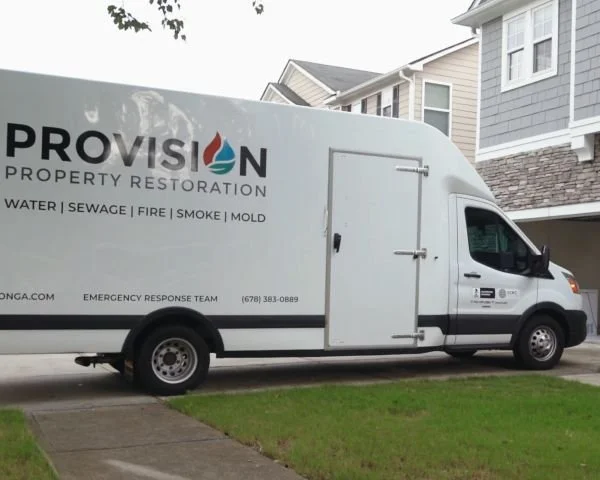
When this all happened and Cathy called us, it was over the weekend. That wasn’t an issue though, we had a team ready to roll. They arrived within one hour of being contacted, before the plumber even left.
Our technician Max walked Cathy through the entire process. He has been with Provision for about two years and has helped many homeowners through similar water damage situations, so he knew how to handle this Alpharetta restoration project.
Non-weather-related pipe bursts like this one are actually one of the more common loss types we handle. These losses are often covered through insurance, and our team is more than happy to help customers understand what needs to happen from the initial inspection through reconstruction.
In situations like this, homeowners are usually dealing with several questions at once:
Where did the water come from?
How far did it spread?
What needs to be removed?
What can be dried?
Will insurance cover it?
Who handles the rebuild afterward?
Part of our job is to slow the situation down, explain what is happening clearly, and help the homeowner make informed decisions without feeling like they are figuring everything out alone in panic mode. In fact, they often note afterwards how our teams help them calm down and realize that they’ve got professionals on site who will handle everything for them, even dealing with insurance claims.
Working Alongside the Plumber to Find the Source
Since the plumber was still there, our team was able to work alongside him to access the burst supply line behind the master bedroom wall.
Once the leak source was opened up and addressed, our team used our equipment to determine how far the water had traveled.
To identify the full scope of the damage, we used:
Moisture meters
Moisture mapping techniques
Inspection behind drywall
Readings near affected walls and flooring
Visual inspection of the master bedroom and nearby areas
What started behind the wall in the master bedroom had traveled much farther than the original source area. Our readings showed that the water had moved through the walls and into the kitchen area.
We showed Cathy exactly what our readings were showing us so she could understand what was happening inside the home and why mitigation was needed.
We’ve found that showing homeowners the details like this matters a lot because hidden water damage can be confusing. A homeowner may only see one wet area, but moisture meters often show that water has spread widely behind the surface.
Starting Mitigation Without Waiting on Insurance
The incident happened over the weekend, and we were on-site to start mitigation the following Monday.
Because non-weather-related pipe bursts are commonly covered by insurance, we were able to begin the mitigation work without waiting for formal insurance approval.
That’s very important to know because waiting too long can allow moisture to continue spreading or sitting inside structural materials. The longer water remains trapped behind walls, beneath cabinets, or under flooring, the greater the risk of swelling, staining, odors, and microbial growth.
Before and during mitigation, we documented the loss thoroughly so Cathy’s insurance company would have what they needed, making the process more streamlined for everyone involved.
Our documentation for her insurance company included:
Photos of affected areas
Moisture readings
Scope details
Equipment details
Drying records
Communication notes for the claim
This helped the process move forward while also giving Cathy more confidence that everything was being handled properly.
Mitigation and Controlled Drying
A three-man mitigation crew completed the work in one day.
The mitigation process included:
Removing affected drywall
Properly disassembling portions of the kitchen where water had spread
Protecting unaffected areas of the home
Setting up drying equipment
Documenting affected materials
Preparing the space for structural drying
Because water had moved from the master bedroom toward the kitchen, it was important to treat the loss as more than a simple wall repair. The goal was not just to remove what looked wet, but to remove affected materials where needed, dry what could be dried, and make sure that no moisture was left behind.
After mitigation was complete, her home went through a seven-day drying period. During that time, our team returned for daily monitoring, which is important because all homes don’t dry evenly. One area may dry faster than another depending on the materials, airflow, humidity, and how long the water was present. So our team checked moisture readings throughout the dry-out to confirm progress and make sure the bones of the home were drying properly.
Why Drying Can Take Several Days
One question homeowners often have for our team is why drying takes several days after the visible water is already gone.
The simple answer we give them is that water loves to hide. Even after wet materials are removed, moisture can remain inside:
Wall framing
Subfloors
Drywall cavities
Cabinets
Baseboards
Flooring materials
A surface can look dry while the structure behind it is still holding moisture, which can result in long-term damage if not allowed to dry correctly and quickly.
That’s why professional drying is based on moisture readings from advanced tools, not simple guesswork. We monitor the home until the readings show that affected materials have returned to acceptable levels.
Stopping too early can leave hidden moisture behind, which may lead to odors, swelling, or microbial growth later.
Insurance and Reconstruction Support
Cathy appreciated that Max and the project coordinator walked her through the process clearly from the beginning. Finding out about the damage was very stressful for her because there were several moving parts happening at the same time:
Plumbing repair
Mitigation
Drying
Insurance communication
Documentation
Reconstruction planning
Provision helped take over the process on Cathy’s behalf by handling documentation, communicating with her insurance, and connecting her with our recommended reconstruction company after mitigation was complete. We also helped with communication during the reconstruction process, making sure that Cathy knew she was in good hands.
Timeline and Team Involvement
The mitigation work took one full day and the drying process continued for seven days with daily monitoring by our team.
Project involvement included:
Max was on-site for the initial inspection and explanation
A three-man mitigation crew for the work day
Daily monitoring visits during the dry-out
Project coordination for documentation and insurance support
Reconstruction referral after mitigation
Helping Cathy Understand the Process
After all was said and done, Cathy told us how she appreciated how clearly Max and the project coordinator explained everything to her, making sure she understood her options so she was able to make informed decisions.
She was able to see where the water had traveled, what needed to be removed, why drying was necessary, and how the insurance documentation would be handled.
That kind of clarity makes a major difference during a water damage emergency, because most homeowners have never dealt with pipe bursts and don’t know what steps to take. For our team, these are situations we handle regularly, so our goal is to guide the homeowner through the process, reduce confusion, and make sure nothing important gets missed.
Why Fast Pipe Burst Cleanup Matters
A burst supply line can release a lot of water before a homeowner realizes what is happening. Even when the leak starts in one room, water can move quickly through walls, flooring, and nearby spaces. Like with Cathy’s Alpharetta home, where the water damage began in the master bedroom and ended up all the way in her kitchen.
Provision Property Restoration provides emergency water damage mitigation and structural drying throughout Alpharetta and surrounding North Atlanta communities, including:
Supply line burst cleanup
Pipe burst water damage restoration
Moisture mapping
Drywall and flooring mitigation
Structural drying
Insurance documentation support
Reconstruction coordination
If you discover a leak inside your home, calling a plumber is important — but calling a restoration company quickly is hugely important especially if you see that water has spread through your house.
Remember, the sooner mitigation begins, the better chance you have of limiting the damage, protecting your home, and making the recovery process smoother from start to finish.